
How to Adapt to Market Changes for Business Success
Stay ahead with strategies to adapt to market changes. Learn how to stay agile, respond effectively, and ensure your bus...

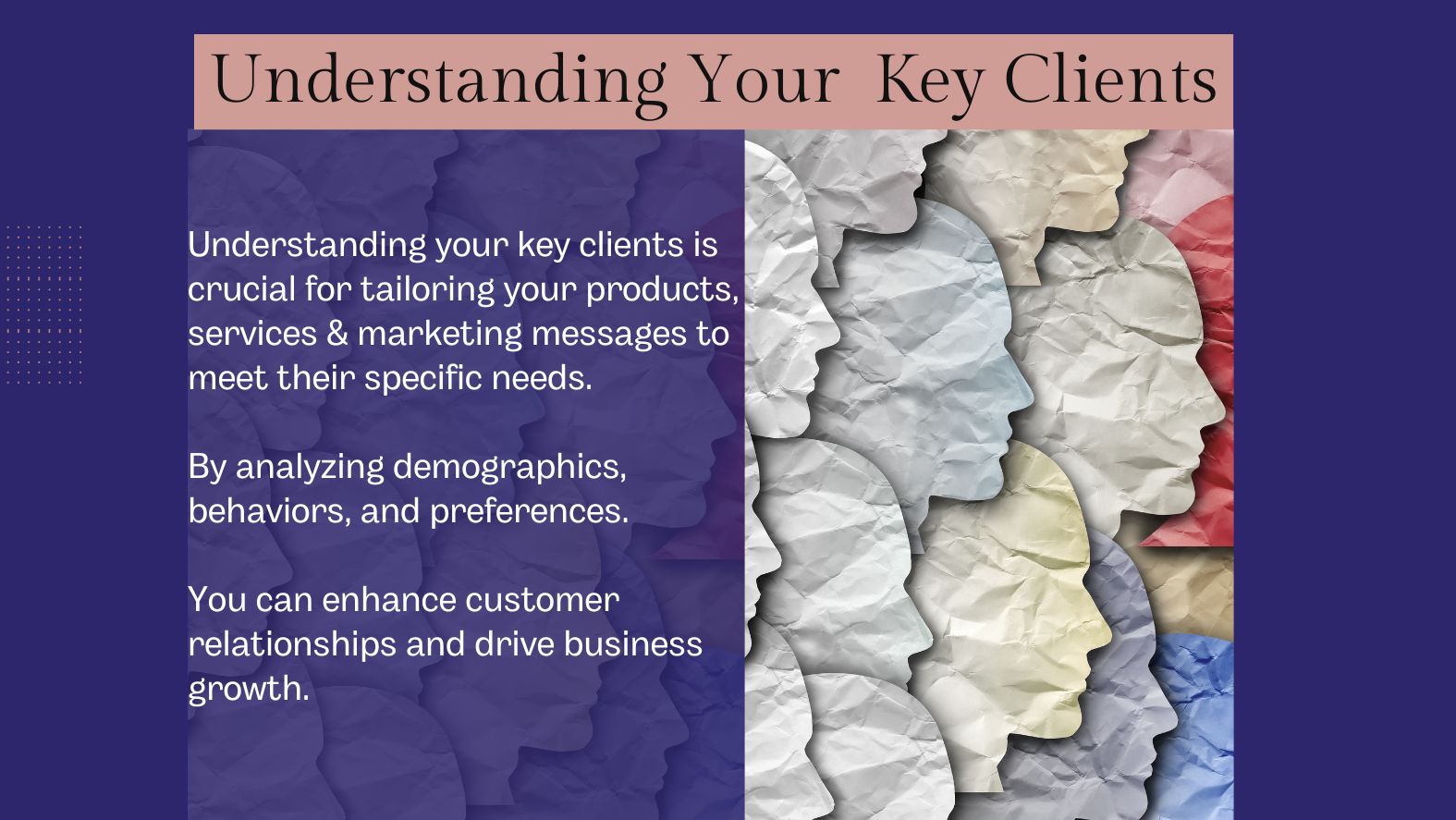
Understanding your key client is the cornerstone of a thriving business. Many companies spend countless hours perfecting their products or services, yet they often overlook the most crucial element: truly knowing their customers. Without a deep understanding of who your clients are, what they need, and what drives their purchasing decisions, even the best offerings can fall flat.
This article will delve into the importance of identifying and understanding your key client, and provide actionable insights to help you build stronger, more meaningful relationships. By focusing on your key client, you can tailor your strategies, improve customer satisfaction, and ultimately, drive business growth.
Much of the online marketing advice you’ve received is fundamentally misguided. I know that's a bold statement, but it’s the truth. Despite what you've been taught about digital marketing, you haven’t been given the full story. The strategies and tactics commonly promoted won’t bring you the explosive growth you seek without first mastering the principles of business . The essential strategies for true success have been kept from you, and here’s why: many so-called ‘experts’ either don’t know them or are reluctant to implement them. These secrets aren’t easy to package and sell to business owners and entrepreneurs.
Contrary to popular belief, success isn’t just about driving traffic and getting thousands of visitors to your website. It’s not about the latest sales funnel software or the newest Google trick that promises a surge of free traffic. The reality is that the online market is more competitive than ever. With rising costs per click on Google Ads, intense competition in SEO, and fierce battles in Facebook advertising, you need a robust strategy to turn traffic into actual leads, customers, and revenue. Without this, you'll waste money and be outpaced by your competitors.
The mainstream solution is to target only those most likely to buy your products or services. But this approach misses the mark. This strategy is flawed and on this article and others to come I will show you a better way. It all starts with understanding and identifying your ideal customer. This crucial insight is the foundation of all effective marketing and will give you a significant edge in today’s crowded marketplace.
Before you get in to details of sales funnels, crafting offers, or setting up Google Ads, Facebook Ads, SEO, or any other marketing system, you need to get one thing right: deeply understand your customer. This foundational step is crucial because nothing else will work effectively if you don't nail this. Truly knowing your customer is the cornerstone of acquiring new clients.
Many businesses think they understand their customers by gathering basic information like age, gender, and location, but this superficial data is not enough. You need to go much deeper to differentiate yourself from the competition. Understanding just demographics won't cut it; you need to uncover your customer's deepest desires, fears, hopes, and dreams.

Take a moment to think about who your customers really are. Imagine you're a detective piecing together clues about their lives. Go beyond the obvious and explore what keeps them awake at night. As Robert Collier once said, "Enter the conversation already taking place in the customer’s mind." This means understanding their internal dialogues and addressing their unspoken concerns.
To identify your 'dream buyer,' use Pareto’s Principle, also known as the 80/20 rule. This principle suggests that 20% of your customers generate 80% of your revenue. Dig deeper, and you'll find that the top 20% of that top 20%—or the top 4% overall—account for 64% of your sales. These are your Power 4%, the customers who can make you immensely successful. Get to know these customers intimately, beyond just basic demographics.
Delve into their passions, fears, and desires. Look for common characteristics among your Power 4%, including age, location, and education level, but also what products or services they are interested in and how they found you. This detailed information is invaluable for targeting similar high-value customers who haven’t discovered your business yet.
Start your research by identifying two or three major keywords related to your products or services. Then, explore where your audience spends their time online—blogs, LinkedIn forums, YouTube comment sections, Amazon reviews, Reddit, Quora, and social media platforms. Pay attention to what they are saying, what they like, and what frustrates them.
Look for recurring themes and language. Digging deep will help you find the gaps in the market, areas where current products or services fall short. These gaps are your opportunities to offer something better. Use tools like Google and Bing’s auto-suggest results to see what questions people are asking. These insights are invaluable for understanding your audience’s needs and crafting messages that resonate.
As you gather this information, organize your findings into categories that highlight the most common comments and concerns. This will help you identify key areas where you can address your audience’s needs better than your competitors. Look at popular posts in Facebook Groups, Reddit threads, and question platforms like Quora for even more insights.
With this detailed understanding, you can create a Potential Client Avatar. This persona will guide every aspect of your business, from product or service development to marketing strategies. Knowing your ideal customer helps you tailor your offerings, marketing messages, value propositions, pricing, and advertising channels to meet their needs.
Specificity is crucial. While targeting a specific group may seem like you’re excluding potential customers, it actually sharpens your message and makes your marketing more effective. Remember, you’re not excluding anyone; you’re simply focusing your efforts on those most likely to buy from you and benefit from your products.
In today’s fragmented media landscape, it’s vital to zero in on your dream buyer. This focus will make your marketing message clear and compelling, cutting through the noise and leading to a more profitable business. While tools and tactics will change over time, the fundamentals of understanding your customers and meeting their needs remain timeless.
By focusing on your ideal customers, you can create a successful business that not only meets but exceeds their expectations. This is about getting to know the right people—your dream buyers—who will value and pay for your products and services.
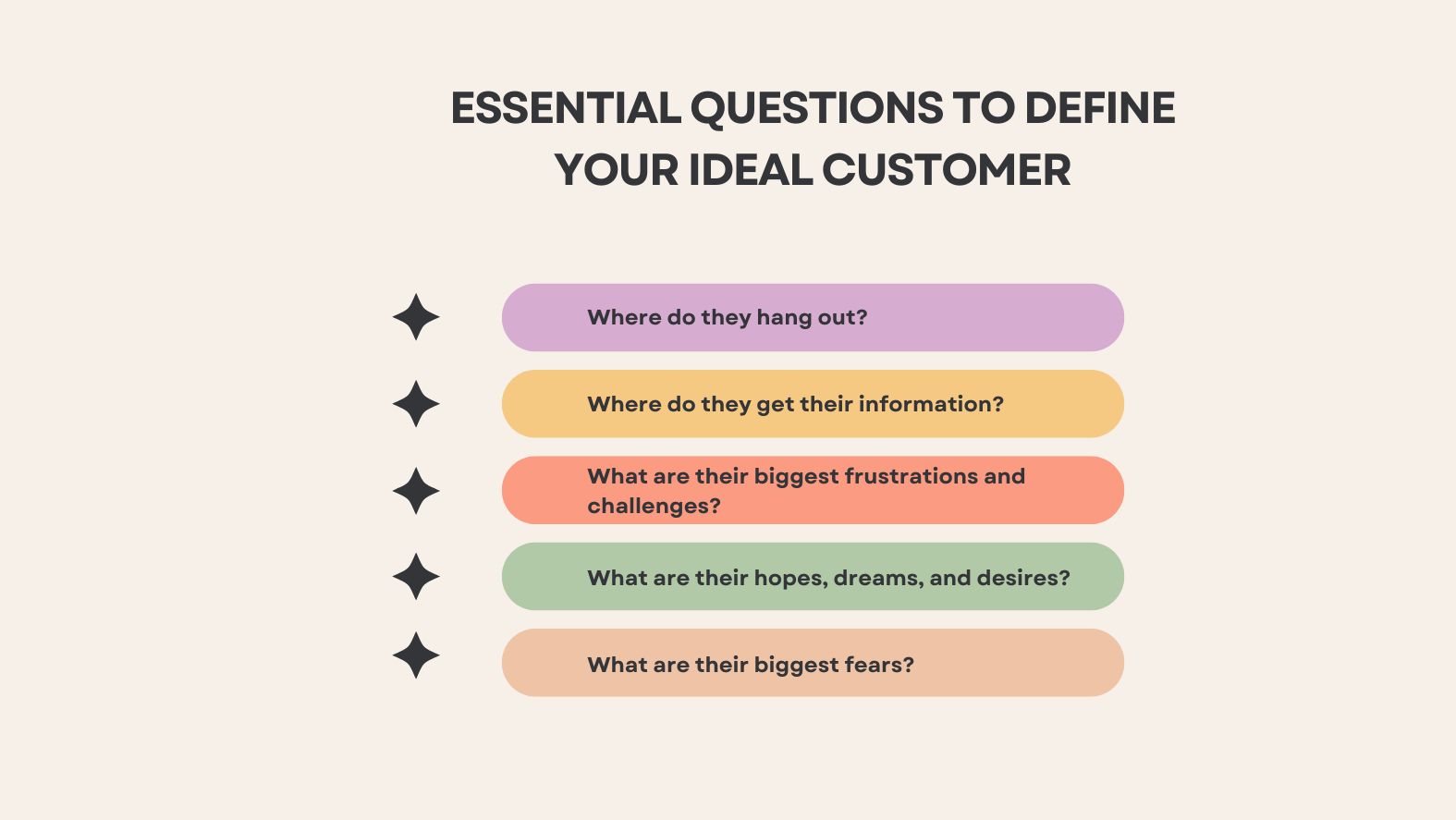
Essential Questions to Define Your Ideal Customer
Here are essential questions to help you define your ideal customer:
Where do they hang out? Identify both online and offline places where your potential customers spend their time. Specificity is key. For instance, instead of saying "Facebook," specify "DIY Enthusiasts Forum" or "Local Home Improvement Workshops." Instead of "enjoys gardening," specify "attends community garden events every weekend." This information will guide where and how you should advertise.
Where do they get their information? When researching, where do your customers turn for answers? It could be Google, specific blogs, YouTube, books, or magazines. Write a clear statement like, "When John wants to learn about new home renovation techniques, he first checks YouTube tutorials on his laptop."
What are their biggest frustrations and challenges? Understand and empathize with their primary pain points. Knowing their struggles allows you to create products and services that address their needs. For example, "I wish I had a reliable handyman for quick fixes" or "I need to renovate my kitchen on a tight budget." Understanding these frustrations helps you connect emotionally with your customers and tailor your marketing messages to solve their problems.
What are their hopes, dreams, and desires? Discovering your customers' aspirations helps you paint a vivid picture of how your products or services can transform their lives. For example, someone might dream of transforming their backyard into a beautiful garden oasis. Use this information to craft compelling marketing messages that show how you can help them reach their dreams.
What are their biggest fears? Identify what keeps your customers up at night. People are often more motivated by fear than by the desire for gain. For instance, a homeowner might fear structural issues that could lead to expensive repairs. Understanding these fears allows you to address them directly in your marketing.
How do they prefer to communicate? Determine your customers' preferred communication channels. Do they like email, text, chat, or physical mail? Communicate with them where they are most comfortable and responsive.
What language and phrases do they use? Pay attention to the specific language and terminology your customers use. Entering the conversation already happening in their minds makes your message more relatable. Document exact phrases and comments from sources like Reddit, Facebook groups, or YouTube to inspire your copy.
What does a day in their life look like? Understanding your customer's daily routine can help you identify the best times to reach them and tailor your messages accordingly. For example, a working professional might have different priorities at 7 am on a Monday than at 8 pm on a Friday.
What makes them happy? Look for ways to delight your customers and create positive experiences. Small gestures like handwritten thank-you notes, personalized birthday emails, or unexpected gifts can build a deeper emotional connection and foster loyalty.
After answering these questions, summarize your findings to create a detailed customer profile.
For example: "John is a dedicated DIY enthusiast who loves improving his home. He frequently visits the DIY Enthusiasts Forum and attends local home improvement workshops. His biggest frustration is not having enough time to complete his projects due to his demanding job as an engineer. When he needs information, he turns to YouTube tutorials on his laptop. John dreams of transforming his backyard into a beautiful garden oasis where he can relax with his family.
However, he worries about the cost and potential structural issues that could arise during renovations. He prefers to communicate via email and is highly active on DIY Facebook groups, often sharing tips and seeking advice. On weekdays, John is busiest in the mornings, but he has more free time in the evenings and on weekends. Personalized emails and surprise gifts like a set of quality gardening tools or a handwritten thank-you note for his loyalty make him feel appreciated."
This deeper understanding of your ideal customer will help you tailor your marketing strategies effectively, leading to significant business growth. Identifying your target market is challenging, but once done, it paves the way for everything else to fall into place. Focus on the 20% of customers who generate 80% of your sales. This approach will help you create a powerful customer avatar and dominate your market.
If you have any Questions, Feel Free to Contact Us—No Obligations.
Register now to Discover New clients & Opportunities with Allfeito!