Communication 101 For Reputation Management
Master the essentials of communication to boost your reputation management strategy. Learn how to effectively maintain a...

Creating the most compelling enticement for your ideal customer is not just a strategy; it's a skill. In today’s competitive market, capturing the attention and loyalty of your target audience requires more than just a good product or service. It demands a deep understanding of your customer's desires, pain points, and motivations. Your offer must resonate on a personal level, offering not only a solution but an irresistible promise of value and satisfaction.
This article will guide you through the process of crafting powerful incentives that speak directly to your ideal customers, ensuring they choose you over the competition. By mastering the art of customer enticement, you'll build stronger relationships, foster loyalty, and drive your business to new heights.
I’m about to unveil an unexpectedly effective method to outperform even the fiercest competition in your market, regardless of how impressive their marketing, how substantial their budget, or how low their prices. I'll demonstrate how to create a High-Value Content Offer (HVCO) that attracts leads like a powerful magnet! This approach will equip your potential clients with the necessary details to make an informed decision, advancing them from the research phase to the purchasing phase. This method allows you to generate numerous leads while establishing yourself as a trusted authority almost immediately – even if no one knows your name!
Consider a contractor company as an example to see how a minor adjustment can yield significant benefits. The standard full-page ad for new homes typically features the company name at the top with a headline like 'SALE' or 'DISPLAY HOMES NOW OPEN.' It resembles all the other contractor ads. They’re essentially relying on luck to compete for a share of the 3% of people currently ready to buy.
Here are some examples of headlines you could use in your ads:
· "The Startling Truth About Internet Service Providers That Could Empty Your Wallet"
· "CAUTION: Don’t Build a New House in Portugal Before Reading This..."
· "The Unexpected Risks of Moving Companies That Could Leave You Stressed and Financially Drained"
Such headlines would compel more people to read your ad and contact you for your free report, right? Presenting information as a public service announcement ensures you stand out. Ads like this attract prospects with the promise of valuable information and, importantly, no sales pitch. The valuable information you offer here is called a High-Value Content Offer (HVCO), which draws leads to you like moths to a flame.
HVCOs can be free reports, ebooks, videos, cheat sheets, but the goal remains the same: to provide your prospects with incredible value, typically by solving a problem they're facing, without asking them to make a purchase. In exchange for the value you provide, you ask for their name and email address. Now that you have their attention, you can include information in your report that will help them move up the pyramid more quickly. For instance, you could encourage prospects who are still saving money and in research mode to consider buying a new house sooner by showing them financing options that don’t require a large down payment.

Your offer must fulfill its promise of high value. When you offer information as an incentive, ensure it is substantive rather than superficial content. This is the first exchange of value your prospect has with your business. They receive the information you offer in exchange for their contact details. You can’t deceive people into providing their contact details and then send them a low-quality two-page 'report' that is merely a promotional piece about your company. The goal is to impress them with this experience. If done correctly, it will prompt a conversation in their mind: 'If this is what they’re giving away for free, imagine what their paid products/services are like!' Lead with your best effort and deliver exceptional value.
Value-Based Marketing operates on the simple premise of 'giving before asking.' It’s about offering value to your customers without immediately asking for a sale. Successful businesses, both large and small, use this strategy to build goodwill in the marketplace. When you deliver substantial value to your prospects, you achieve a double benefit: First, your prospects appreciate the materials. Second, you establish yourself as the trusted expert. While others are shouting, 'Buy, buy, buy!' you’re building goodwill by actually helping people. This kind of marketing speaks to individuals who aren’t yet ready to buy but are curious about what you offer.
Remember – that’s a staggering 97% of prospects! Most people get this wrong and immediately try to sell to the 97%, but fast selling doesn’t work with cold traffic. These people have no idea who you are – it’s like proposing marriage on a first date! We will revisit this on another article, but for now, remember this rule: The temperature of your marketing message must match the temperature of your traffic.
Don’t be skeptical. Value-based marketing isn’t a new strategy or a flashy new concept. It’s just one that’s often overlooked. It’s how you’ll outperform your competitors – even if you’re up against an industry giant with a large budget.
Many business owners may doubt this approach, but it often works better than anything else you’ve seen before.
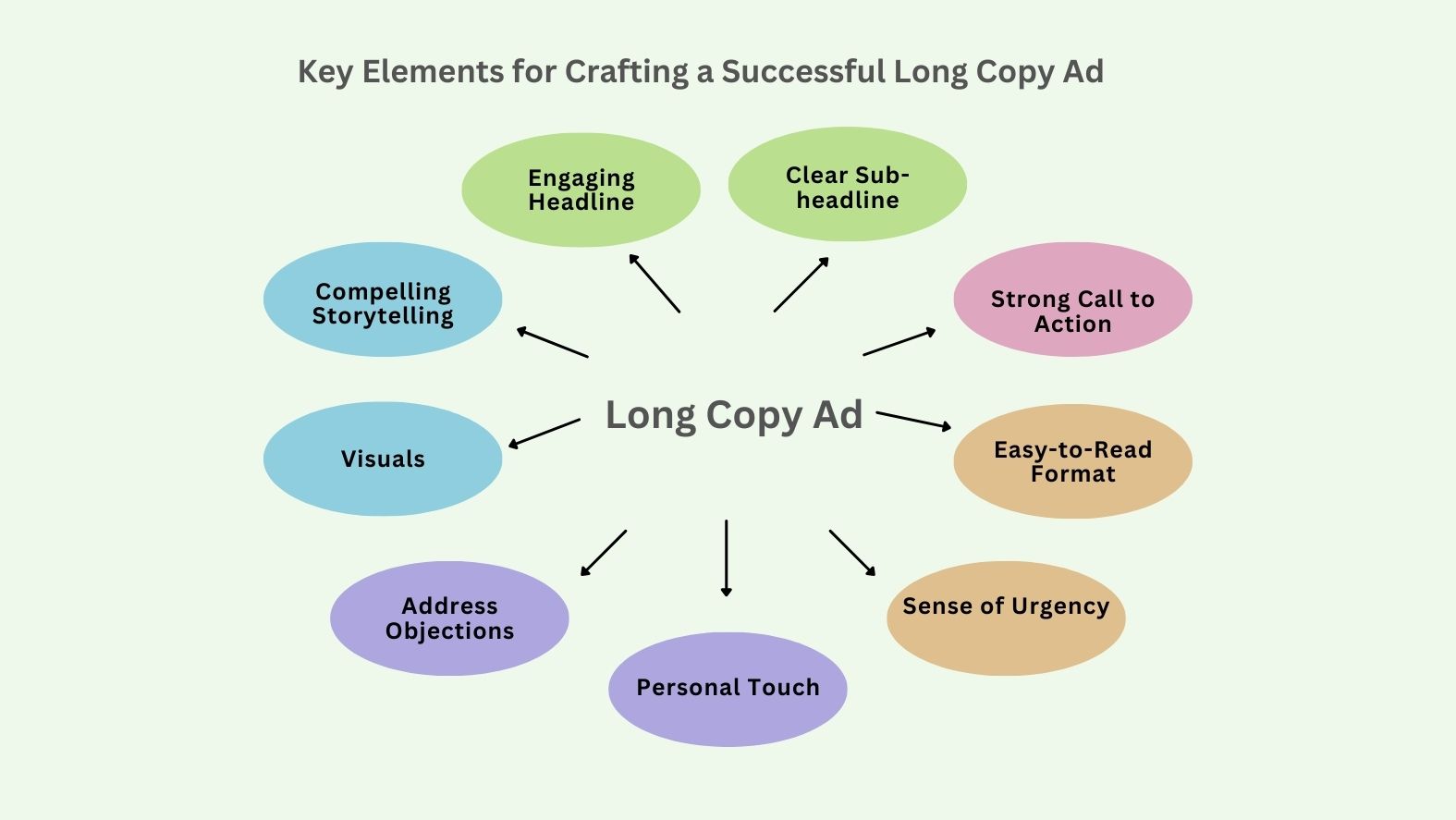
Creating an effective long copy ad requires several key elements to capture attention and drives clicks. Here’s what makes a long copy ad successful:
Your headline is the first thing readers see. It must grab attention immediately and compel them to read further. A strong, clear, and intriguing headline sets the stage for the entire ad.
A sub-headline that supports the main headline can maintain reader interest. It should briefly elaborate on the promise made in the headline and entice readers to continue.
Example: "Discover The Proven 5-Step Process that Saves You Time, Money, and Stress"
It elaborates on the promise made in the headline, indicating that the ad will provide a detailed, actionable solution.
Long copy ads excel when they tell a compelling story. Whether it’s a customer testimonial, a founder’s journey, or a relatable problem, storytelling keeps readers engaged.
A long copy ad must include a clear and compelling CTA. Explicitly instruct readers on the next step, whether it’s to opt-in by leaving their contact information, download your HVC, or reach out for more information.
Even though it’s a long copy, integrating visuals such as images, videos, or infographics can break up the text and make the ad more engaging. Visuals can illustrate points more effectively and keep the reader’s interest.
Break up the text with subheadings, bullet points, and short paragraphs to make it easy to read. Long blocks of text can be intimidating and cause readers to lose interest.
Example: Use headings like "Step 1: what is Mold?", "Step 2: what are the causes?", "Step 3: Common errors in addressing Mold issues", Step 4: How to fix it.
Anticipate and address potential objections within your copy. By tackling concerns head-on, you can alleviate doubts and provide reassurances that keep readers engaged and interested.
Create a sense of urgency to encourage immediate action. Limited-time offers, countdown timers, or emphasizing the benefits of acting now can push readers to take the next step in downloading or leaving their contacts.
Personalize the ad to make it resonate with the reader. Use conversational language and direct appeals to make the reader feel like you’re speaking directly to them.
Example: "We understand how important your home is to you. That’s why we take the time to listen to your needs and ensure every detail is perfect." Use conversational language to build a personal connection.
This strategy works for all types of media – websites, landing pages, blog posts, email, Online News Channels, Facebook ads, or Google ads.
Let’s look at another example of informative ad:
“The Real Truth You Don’t Know About Humidity & Mold in Your Home” This headline is effective because it suggests that everyone wants to know about mold & humidity issues in homes and assumes there are things you don’t know. It should goes on to address the pressing issues people have by explaining in detail what the real issue is and how to resolve those issues.
An excellent CTA; it’s not “call us today and get a quote.” As an example, it could be: “ We can’t cover everything here as it would take several volumes and naturally, you probably have further questions. We’d be glad to send you a full copy of this article, at no charge, no obligation. Just write or phone us at: Phone: +351-123-4567 Email: atia@gmail.com”
It says we are here, we have the knowledge, and if you need more information, get in touch and we will tell you more, no obligation. Just as simple as that. No mention of business names or direct marketing. This strategy builds trust in your marketplace and ultimately increases your sales.
Naturally, anyone reading anything these days is skeptical, especially online. While your competitors pretend they don’t want to sell anything or are just screaming 'Buy! Buy! Buy!', this ad immediately addresses reader skepticism, generates interest, and intrigues your target market – homeowners who may or may not have mold or humidity issues, or those who are simply curious.
I know you might think people don’t read much these days and prefer swiping or scrolling. People do read! To make sales, long-form copy will outperform short-form copy every single time.
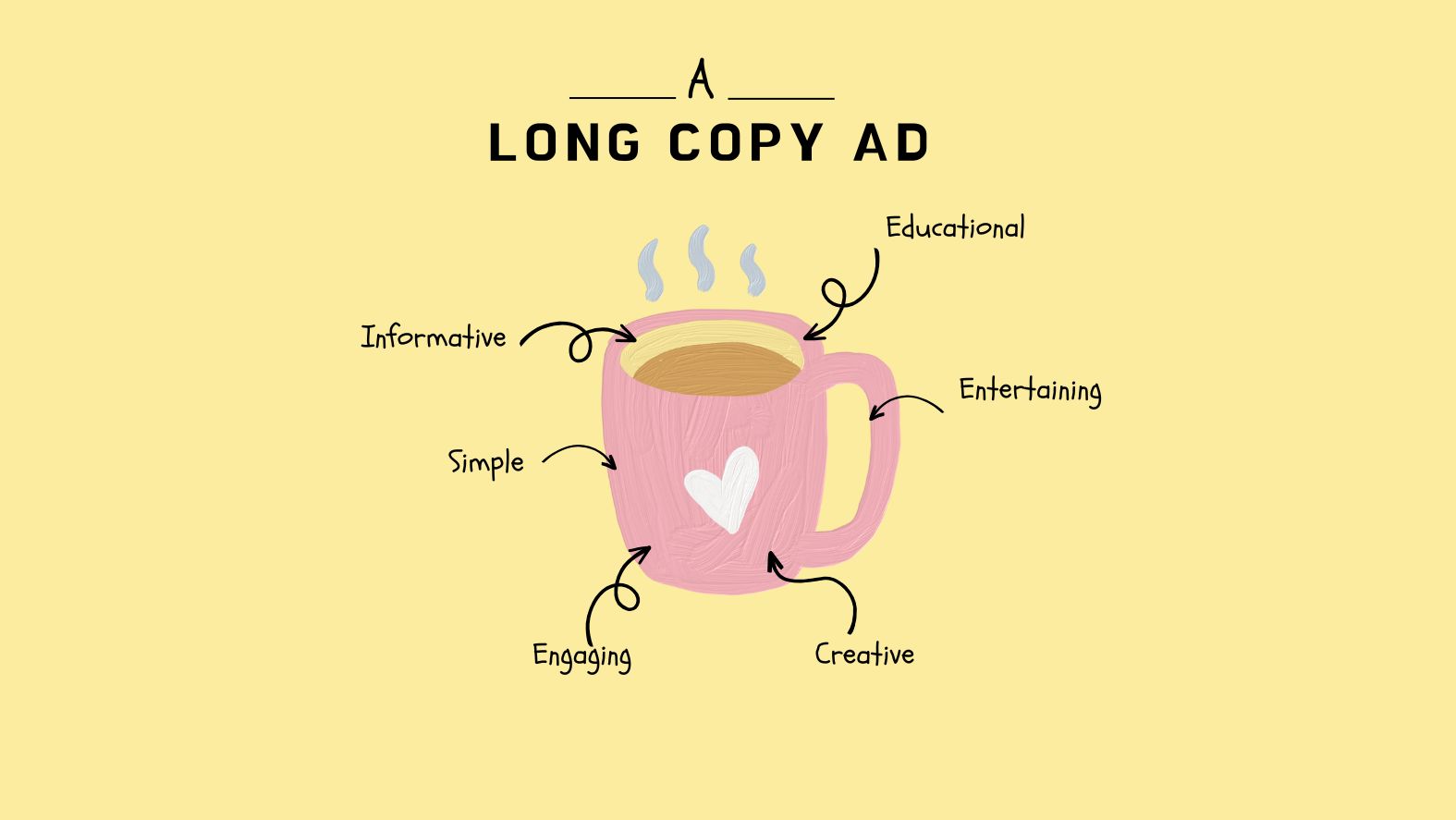
The key is that the copy must be informative, educational, simple, entertaining, and engaging. You can’t just write long copy and expect it to make your prospects buy. When your copy is entertaining, people won’t care how long it is. The buyers are the ones who read it. They are the ones with pressing questions, looking for answers. The people who won’t read your copy aren’t going to buy anyway. So would you rather gear your copy towards those who will never buy, or would you rather convert more of the people who are genuinely interested and looking for that final nudge?
The answer should be obvious. This approach is highly effective for several reasons: It creates goodwill in the marketplace by giving something of value away for free before asking for anything. This method appeals to the exact segment of the market you want because your message stands out amidst the noise created by loudness, hype, and general mediocrity of your competition. If your marketing consists of just shouting, 'Buy my stuff!', then you’re only appealing to a fraction of your potential buyers and missing out on a large percentage of the total number of potential buyers in your market.
This is a great reminder that the job of an ad is not to sell but to create intrigue and get the prospect to raise their hand and say, 'I’m interested.' Why this approach is so much more effective than what everyone else is doing.
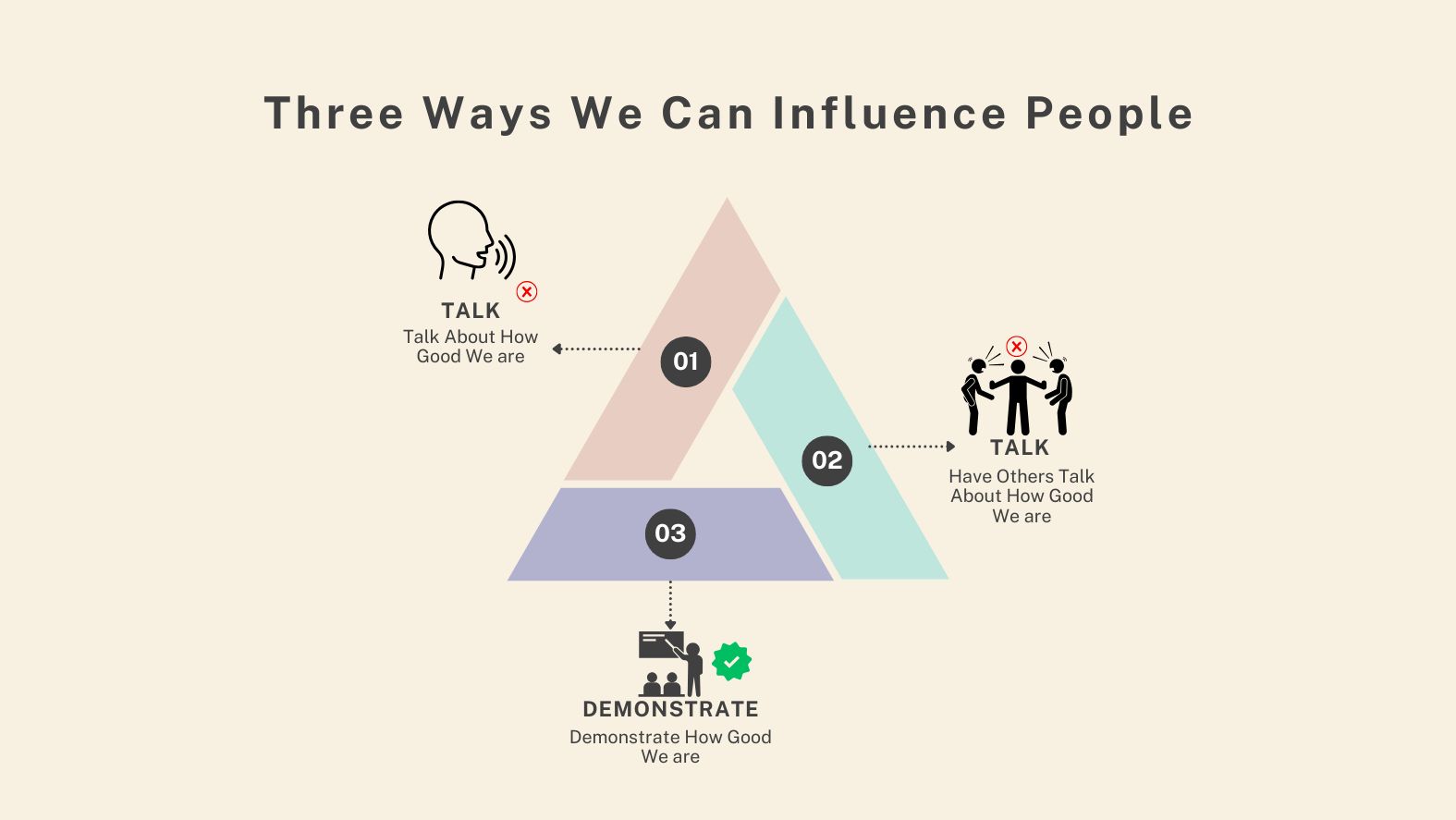
There are three ways we can influence people:
1. Talk about how good we are.
2. Have others talk about how good we are.
3. Demonstrate how good we are.
In sales and marketing, #3 is the most effective. Demonstrating how good you are doesn’t just influence them but also creates heaps of goodwill and helps you reach a much larger segment of your market. People are ten times more likely to come to you to learn something than to be sold to. Using this approach will generate a lot of leads. We can take the information and answers we know our prospects are craving and package it as a High-Value Content Offer (HVCO).
Let’s look at these two different scenarios:
Scenario 1:
· You send 100 people to a website that only focuses on selling.
· The site has a call to action (CTA) like "get a quote."
· Usually, about 3% of visitors respond to this kind of CTA, so you get 3 leads.
· Out of these 3 leads, 1 person typically buys. Result: 1 sale.
Scenario 2:
· You send the same 100 people to a website that provides valuable information answering their key questions.
· This approach is more educational and not directly trying to sell.
· Usually, about 25% of visitors engage with this helpful content, so you get 25 leads.
· Out of these 25 leads, about 12% eventually buy if you follow up correctly, resulting in 3 sales. Result: 3 sales.
In both scenarios, it costs the same to get 100 visitors. Scenario 2 leads to more sales because it focuses on educating and providing value first. Think about what valuable information you can offer your audience, like a free report, video, or webinar, to attract more interested people and nurture them until they are ready to buy.
If you have any questions, feel free to Contact Us—No obligations.
Sign-up on Allfeito & Get Noticed by the Right Clients who Seek your Expertise.