-2024-10-29647.jpg)
How to Become a Landscaper
Discover the steps to becoming a professional landscaper, from essential skills and training to building a portfolio and...
So, you've successfully acquired clients—congratulations! But landing clients is just the beginning. The next crucial step is figuring out how to manage these relationships effectively. This is where Customer Relationship Management (CRM) comes into play. CRM is more than just a tool; it’s a strategy that helps you understand your clients better, meet their needs more efficiently, and foster long-lasting relationships that drive your business growth.
In today’s competitive market, maintaining strong relationships with your clients is paramount. It's not enough to only provide excellent products or services; you need to ensure that your clients feel valued and understood. CRM systems allow you to collect and analyze data about your clients, enabling you to tailor your interactions and improve their overall experience with your business.
Effective CRM can transform your business operations by streamlining processes, enhancing customer satisfaction, and ultimately boosting your bottom line. By leveraging CRM, you can keep track of client interactions, anticipate their needs, and provide personalized service that keeps them coming back.
This article will guide you through the importance of CRM, the benefits it offers, and how you can implement a robust CRM strategy to manage your client relationships successfully. Let’s dive into the world of CRM and discover how it can help you cultivate stronger, more profitable client relationships.
Customer relationship management (CRM) refers to the strategies, processes, and technologies used to build and maintain relationships with customers.
The key to effective CRM and customer communication is tailoring your approach to the different stages of the customer journey. Your users will feel valued, and you’ll increase your customer retention rates.
Customer experience life-cycle
The impact of customer relationship management on your business
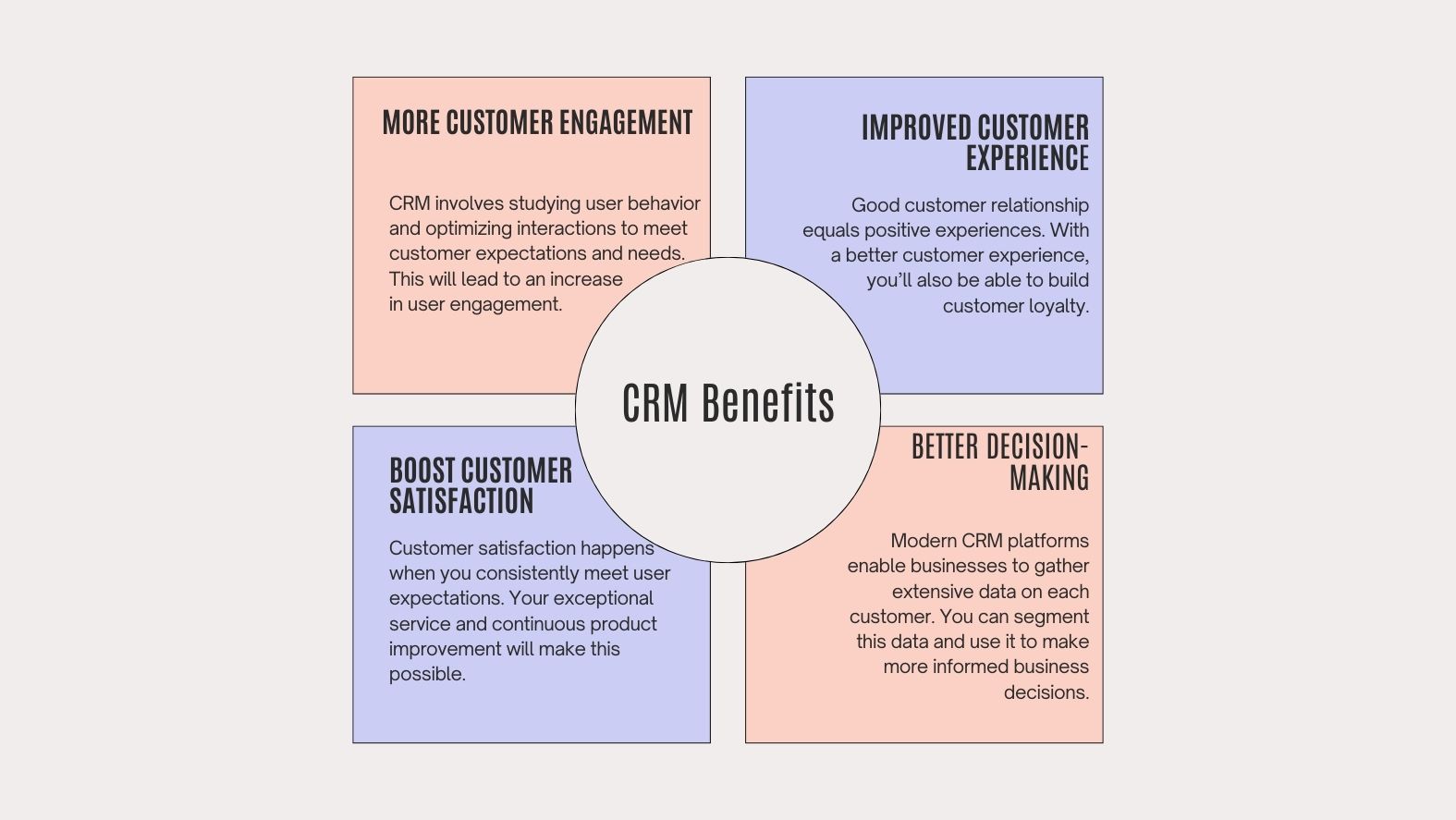
CRM is not only about building but also maintaining customer relationships. And the benefits are enormous. Some of the things you stand to gain include:
More customer engagement: CRM involves studying user behavior and optimizing interactions to meet customer expectations and needs. This will lead to an increase in user engagement.
Improved customer experience: Good customer relationship equals positive experiences. With a better customer experience, you’ll also be able to build customer loyalty.
Boost customer satisfaction: Customer satisfaction happens when you consistently meet user expectations. Your exceptional service and continuous product improvement will make this possible.
Better decision-making: Modern CRM platforms enable businesses to gather extensive data on each customer. You can segment this data and use it to make more informed business decisions.
What are the 3 types of CRM systems?
There are essentially three types of customer relationship management systems, each with its uniqueness. Knowing the different types will help you decide on the right CRM tool, so let’s briefly go over them.
Collaborative CRM system
This CRM system aligns business activities and facilitates collaboration between marketing, customer support, and sales teams. Collaborative CRM systems also make it easy for different departments to share customer data, creating a holistic approach to customer relationships. This function is useful for large teams, especially ones that are spread across multiple locations.
Operational CRM system
The main goal of this system is to streamline business operations, customer interactions, sales, and marketing processes all in one place. Operational CRMs are the most common because they are used when companies aim to understand and nurture users at every point in the customer lifecycle.
Analytical CRM system
This is more technical and mainly focuses on using customer data to improve the user experience. Analytical CRMs analyze raw user behavior data to reveal customer preferences, preferred channels, touchpoints, trends, sales forecasting, etc. This CRM system is most useful to mid-size and large companies that need to analyze huge data volumes.

8 examples of customer relationship management worth knowing
There are multiple ways to study and interact with customers, each with unique advantages. Below are eight customer relationship examples to inspire you.
1. Tracking customer behavior
Behavior tracking is key to understanding your customers and how they interact with your product or services. You’ll uncover valuable data on purchase intent, causes of friction, etc., to see what works and what doesn’t with your existing audience.
There are different ways to analyze customer behavior, depending on the data you want to gather. You could track on-site or in-app, measure engagement with a specific feature, track the behavior of a certain user group, etc. With all this data at hand, you’ll be in a much better position to increase customer retention and end up with more loyal customers.
2. Automated feedback collection
Customer feedback lets you know what users think and feel about your product. Feedback is also a reliable way to eliminate guesswork and collect data that will enable you to make improvements customers will actually appreciate. Implement surveys like to collect qualitative and quantitative feedback, then analyze the results to extract actionable insights.
3. Data-driven decisions
With enormous amounts of data widely available to businesses, it’s easier than ever to make sound decisions. Customer data will help to spot trends, analyze performance, predict user behavior, and much more. These will allow you to make smarter decisions to build good customer relationships and drive business growth.

4. Personalized customer experiences
From reaching a prospect with a targeted marketing message to nurturing them through personalized support and closing a sale, your company should focus on delivering tailored interactions. Personalization makes customers feel seen and understood, leading to a strong bond between them and the company. Begin your personalization journey by segmenting users according to similar characteristics or behavior. That way, no aspect of the customer experience will be overly generalized.
5. Automated customer support
In simple terms, automating customer support is using technology to enhance your customer service. Your support will be fast and available 24/7—which is what modern customers want.
Automated customer service at certain circumstances work and can make your users happy; but lets not over look the fact that consumers are fed-up with the systems that are complicated and the chat bots that repeat the same information. Things like live chat, user pilot works well but mostly human contact is best because clients will look through your website on the FAQ or other ways that you have set up to get answers they might have before reaching out.
Aside from bots, self-service resource centers are another way to automate support. These are collections of helpful resources available to customers at all times to make sure they are never stranded.
6. Omnichannel service
Even if you’re super responsive, providing support on one channel only won’t cut it. Every user has a channel they prefer to use for communication. Asking them to switch to your preferred method will add friction to the user experience, so it’s best to be flexible by providing multiple communication channels.
Most businesses integrate web, in-app, social media, and email as their main communication channels. But choosing the right ones for you will depend on your audience. Test various channels and analyze user responses before deciding which ones to stick with.
Keep in mind that multichannel support doesn’t automatically make it omnichannel. Being omnichannel means your platforms are integrated, and the customer can switch from one to another seamlessly—that’s what you should aim for. Also, consider customer touchpoints across the different user journey stages when designing your omnichannel support.
7. Strong social media presence
We can’t discuss customer relationship management examples without mentioning social media—the 21st-century powerhouse of relationship building. From connecting with long-lost friends to finding love, people use social media daily to build quality relationships.
Business isn’t left out; most people depend on social media for value-driven activities like customer support and finding good products.
You can’t afford to be absent on social media. Utilize it to connect with customers, deliver product updates, listen to what people say about your brand, and so on. Used well, social media platforms can help you create customer loyalty, improve brand perception, and generate free word of mouth.
8. Marketing automation
So far, we’ve only talked about support automation, but your marketing efforts could also be automated to save time and increase efficiency. The right automation tools can help you create effective workflows and reduce repetitive tasks.
Common use cases for marketing automation include lead management, content planning and distribution, social media scheduling, etc. Most marketing automation tools will also include analytics to help businesses keep track of campaign performance.
Another use case of marketing automation can be automating surveys for different user segments.
In conclusion, Customer Relationship Management is essential for modern businesses, focusing on understanding and meeting customer needs at every stage of their journey. By implementing effective CRM strategies and leveraging the right technologies, businesses can enhance customer satisfaction, improve engagement, and drive sustainable growth.
If you have any questions, feel free to contact us—no obligations.
Join our Network & gain Exposure in the Market

 (1)-2024-10-29237.jpg)